


In a significant display of camaraderie and strategic alignment, Prime Minister Narendra Modi and President Donald Trump convened at the White House on February 14, 2025, to chart out a new course for the US-India partnership. The meeting, marked by mutual respect and shared goals, introduced the Comprehensive Operational Military and Political Action for Combined Technologies (COMPACT) initiative, signaling a robust future for bilateral relations.
A New Era of Defense and Technology Collaboration
The highlight of the summit was undoubtedly the launch of the COMPACT initiative. This ambitious project aims to deepen defense ties, streamline technology sharing, and foster innovation in fields such as artificial intelligence, quantum computing, and space exploration. The initiative represents a paradigm shift from traditional defense cooperation to a more integrated approach where both nations can leverage each other’s strengths for mutual benefit.
One of the concrete outcomes of this initiative is the agreement for joint production of F-414 jet engines in India, underscoring the US’s commitment to co-develop and co-produce defense equipment with India. This move is seen as a significant step towards self-reliance in India’s defense sector and a testament to the trust and strategic foresight of both leaders.
Economic Synergies and Trade Talks

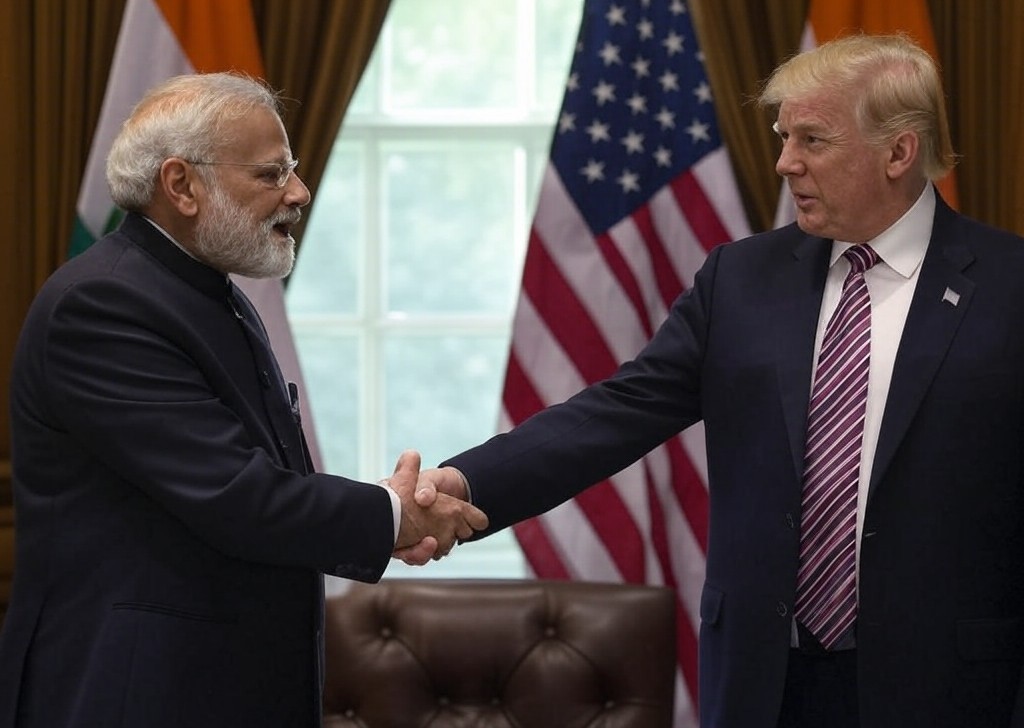
Economic discussions between Modi and Trump were equally pivotal. With an eye on reducing trade deficits and barriers, the leaders talked about enhancing Indian exports to the US, particularly in areas where India has a competitive edge like pharmaceuticals and IT services. President Trump’s mention of reciprocal tariffs sparked discussions on how these could reshape trade dynamics but also presented an opportunity for negotiation and balance.
The dialogue also ventured into the realm of technology and innovation, with both leaders expressing enthusiasm for collaborations in 5G technology, cybersecurity, and the burgeoning field of clean energy. The emphasis was on creating a framework that would allow for significant investments in India’s semiconductor industry, potentially turning the country into a hub for tech manufacturing.
Global Strategy and Multilateral Engagement

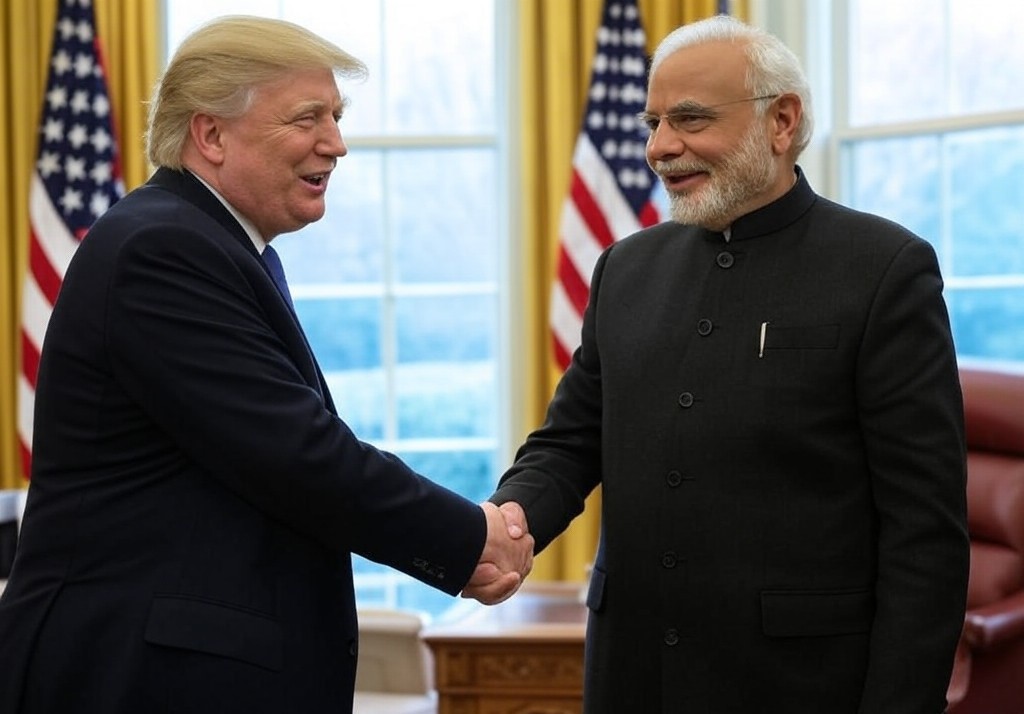
On the global front, the meeting was an acknowledgment of the pivotal roles both nations play in international politics. Climate change, a pressing global issue, was on the agenda, with commitments to work closely in international forums like the UN and G20 to push for sustainable development and clean energy transitions. This reflects a mutual understanding of the need for leadership in global environmental stewardship.
The leaders also discussed the importance of democracy, rule of law, and human rights, reinforcing their shared values and commitment to a free, open, and inclusive Indo-Pacific region, subtly countering the assertive moves by other powers in the region.
Strengthening Cultural and Educational Ties
Not to be overlooked, the summit also highlighted the importance of people-to-people connections. Educational exchanges, cultural programs, and visa facilitation were discussed as means to deepen the bond between the citizens of both countries, fostering a generation that values the strategic partnership.
Conclusion
The Modi-Trump White House meeting in 2025 might well be remembered as a turning point in US-India relations. With the COMPACT initiative as its cornerstone, the partnership is poised to evolve in ways that will have long-term implications for security, economic prosperity, and technological advancement. As the world watches, this collaboration could herald a new era of global influence for both nations, united by a vision of peace, innovation, and shared prosperity.