


U.S. Cuts USD 21 Million India Voter Fund:
In a bold policy shift, U.S. President Donald Trump has scrapped a USD 21 million fund designed to enhance voter participation in India, arguing that the country’s economic strength and trade practices make such support redundant. Announced by the Elon Musk-led Department of Government Efficiency (DOGE), the decision is part of a larger USD 723 million slash in foreign aid, targeting programs in countries like Moldova, Bangladesh, Nepal, and beyond. Trump, however, was quick to clarify his stance, expressing deep respect for Indian Prime Minister Narendra Modi while questioning the necessity of the expenditure.
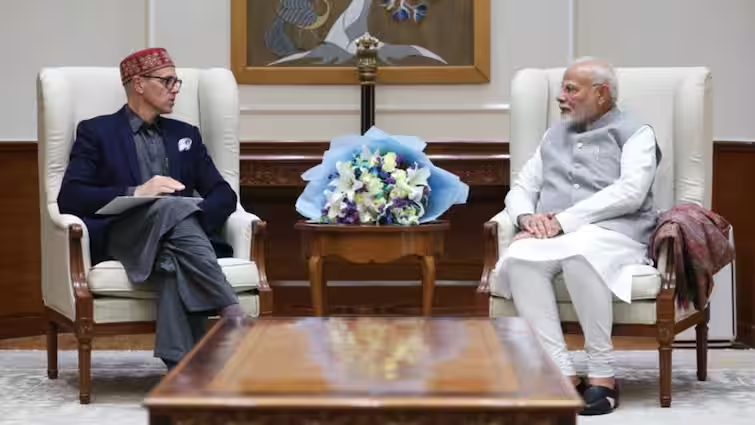
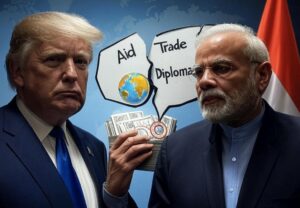
During a briefing at his Mar-a-Lago residence, Trump emphasized India’s robust economy and high tariffs on U.S. goods as reasons for the cancellation. “India is doing fantastically well, and I have great admiration for PM Modi. But with their trade barriers, it doesn’t make sense for us to send funds they don’t need,” he said. The move comes shortly after Modi’s visit to the U.S., where the two leaders discussed strengthening bilateral ties, raising questions about how this decision might affect their relationship.
In India, the reaction has been swift and varied. Some political analysts see the cancellation as a non-issue, arguing that India’s election commission operates independently and has never relied on foreign funding for voter turnout. Others, including members of the ruling Bharatiya Janata Party (BJP), have suggested the fund might have been an attempt at external influence, though no evidence of its implementation has surfaced. Meanwhile, opposition leaders have called for clarity on why the U.S. considered such funding in the first place.
The U.S. decision has also drawn scrutiny from international relations experts. Dr. Sarah Klein, a foreign policy analyst at Georgetown University, noted, “This reflects a broader trend under Trump to prioritize American interests over global engagement. While it might save money, it could strain alliances with key partners like India.” Others argue that the cut signals a new era where economic competition trumps traditional aid, potentially setting a precedent for future U.S. foreign policy.
Global Ripple Effects
The cancellation isn’t just a bilateral issue. It’s part of a larger DOGE initiative to streamline U.S. spending, but critics warn it could weaken America’s soft power—the ability to influence other nations through diplomacy and aid. In Asia, where China and Russia are expanding their influence, some see this as an opportunity for those powers to fill the void. In contrast, supporters of Trump’s approach argue that nations like India, with a GDP growth rate of over 7%, should shoulder more responsibility for their own democratic processes.
Trade tensions also loom large. India’s tariffs on U.S. products, which Trump has repeatedly criticized, have been a sore point in negotiations. By tying the fund cancellation to these tariffs, Trump may be signaling a harder line in future trade talks, potentially affecting everything from technology exports to defense agreements.
What’s Next for U.S.-India Relations?
Despite the controversy, both sides have downplayed any immediate fallout. The White House insists the decision is fiscal, not political, while Indian officials have yet to issue an official response. However, experts suggest that future summits and trade deals could face closer scrutiny, with India possibly retaliating by tightening its own trade policies.
For now, the story is a litmus test for how the U.S. and India—two of the world’s largest democracies—will navigate economic rivalry, diplomatic ties, and the role of foreign aid in the 21st century.